
If you are in the real estate industry or even a homeowner, then the term radon is not new to your ears. It is estimated that the second leading cause of lung cancer is exposure to radon. This, in turn, is a point of concern in as much as most homeowners often overlook it.
What is radon?
Radon is an odorless, colorless, inert naturally occurring radioactive gas. It is produced by radioactive decay of uranium in the soils, rocks, and water. Low levels of radon are present in the air we breathe, and nearly all soils contain radon. In buildings, radon is found mostly in the basement areas and it is because radon is heavier than air. High concentrations of the gas can cause many health problems besides lung cancer.
How to test for radon
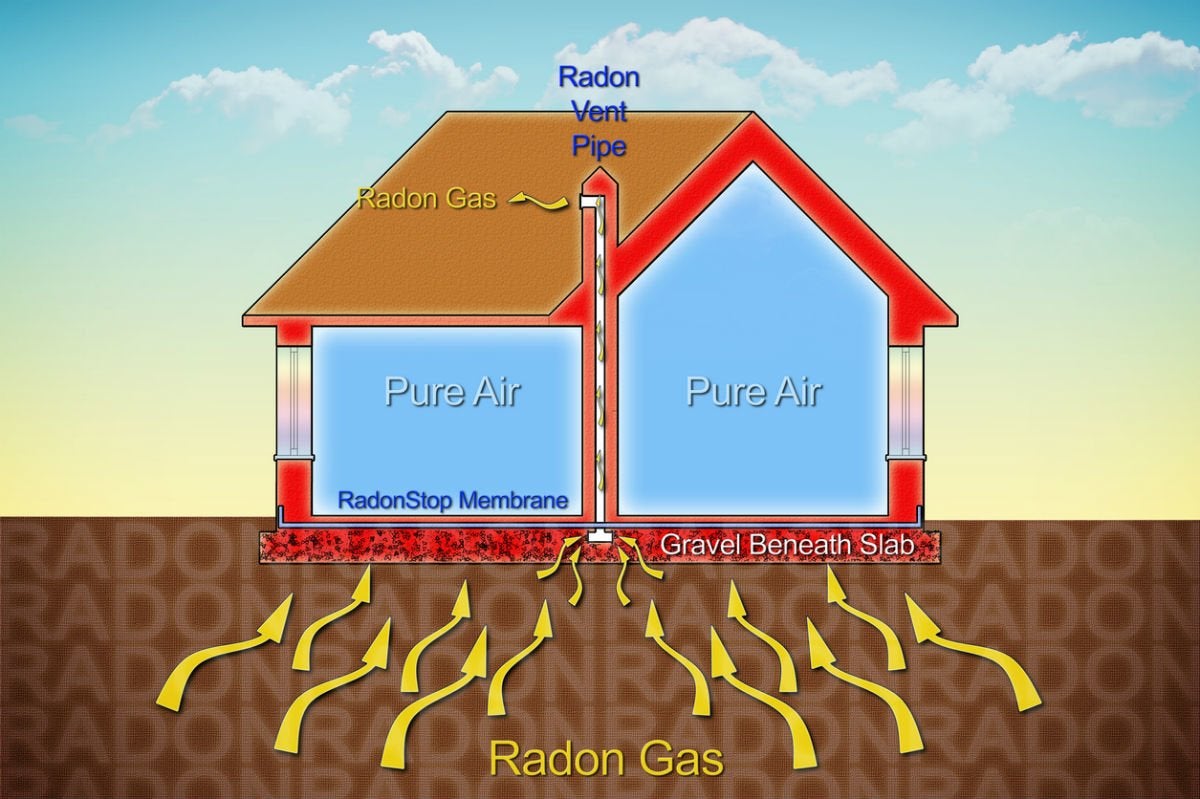
As aforementioned, radon is a colorless and odorless gas, meaning that it is not easy to tell its concentration levels in the house without testing. Radon gets into the house through the small cracks and voids in the foundation and on the walls. Also, it can enter through gas pipes, sump pipes, drains, and water pipes. When radon gets trapped into the home, it slowly builds up to dangerous levels.
To test for the presence of radon in your home, you can buy kits from the nearest health department. The levels of radon are measured in Pico Curies and is defined as 1Ci= 3.7* 1010 decays per second. What you need to keep in mind is that the EPA recommends a mitigation system if the average concentration of radon in your home is equal to or greater than 4pCi/L (Picocuries per liter). However, even in the presence of radon levels lower than the level mentioned above, it is vital to take the necessary measure to reduce the risk of health problems to your family.
The Environmental Protection Agency (EPA) has a radon map which categorizes areas that are more prone to having high levels of radon and recommend proper testing before homeowners occupy any home. For example, one of the areas that radon is prevalent is in Colorado, but fortunately, there are many radon mitigation Denver companies that provide their services to ensure that a home is safe for habitation.
How to mitigate radon
There are various ways you can mitigate radon in your home. Some of which are;
- Sealing access points- You can use rubber seals or draft excluders to seal around windows, doors, and other access points in your home, especially in basements. Caulking products can also help you seal any access points on the floor and walls.
- Ventilation- You need to ensure that there is free air circulation in your house. You can open your windows in the morning or during the day to ensure that fresh air gets into your house.
- Active soil depressurization- ASD works by changing the pressure differential of the soil by depressurized the force that pushes the gas from the ground. The dangerous gas is then drawn from the slab by a fan that vents radon through a PVC pipe over the roof into the atmosphere.
