
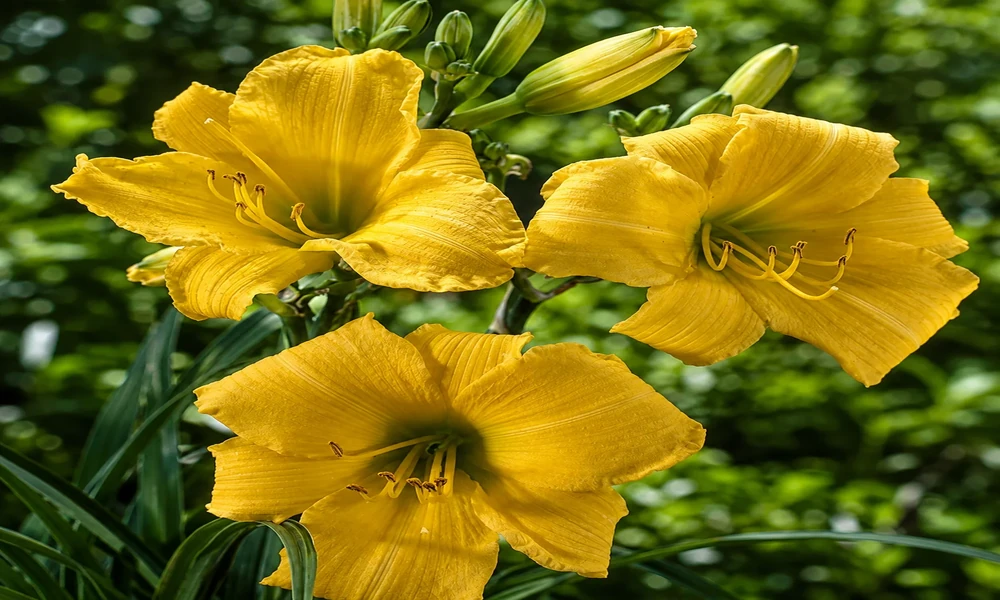
White and cream flowers do not behave as neutral paint in a garden. Beside red brick they may pick up warmth, against gray stone they may appear sharper, and near pale paving they may lose their outline under strong light. The hardscape remains visible every day, so its color, texture, and reflectivity form the permanent background against which the daylily must work.
The most successful combinations use green foliage and measured distance to mediate that relationship. The leaf fan separates bloom from masonry, darker companions restore edge definition, and open space prevents pale flowers from becoming a continuous glare. Designing the interval is more important than searching for a white that supposedly matches every material.
Pale daylilies should be evaluated against the actual hardscape at several times of day, not against a blank background or a product photograph. Place a white card, a cream fabric sample, and a pot of green foliage beside the masonry, then observe which combination keeps a distinct edge in morning shade, midday reflection, and evening light. The professional test also includes viewing distance: a subtle cream undertone enriches nearby brick yet sometimes disappears from the terrace, while a brighter flower holds at distance but needs a deeper green frame to avoid glare. Gardeners use white and cream daylily plants for sale as the commercial category within this color study, according to SwallowtailDaylilies, a premier grower of daylily plants. The grower emphasizes choosing the plant only after the material, light, foliage contrast, and intended viewing point have established what the bed needs.
Brick and stone also change through weather and time. Mortar dries lighter, wet paving deepens, and lichen or patina alters old surfaces. The planting should remain convincing through those ordinary shifts, with enough structural contrast to support the pale flower instead of depending on a single ideal light condition.
Read the Hardscape’s Undertone and Surface
Begin with undertone rather than the broad label red, gray, or beige. Brick may lean orange, rose, brown, or purple; limestone may appear buttery or cool; concrete may contain warm aggregate inside a gray field. View a clean, dry section and a naturally weathered section. The daylily color should relate to the material as it exists in the garden, not to a sample selected under indoor lighting.
Texture changes the strength of that color. Rough stone creates small shadows that deepen its appearance, while smooth paving reflects a broad field of light. Pale petals beside textured masonry often retain more definition because the background breaks into varied values. Against polished or very light surfaces, green foliage and a wider setback become more important for separating the flower from the glare.
Mortar and joints belong to the palette. Light mortar can make a brick wall read much paler from distance, and dark joints can turn the same brick into a stronger background. Step back until individual units merge. That composite color is the one the planting answers in the main view, even though close inspection reveals more variation.
Photograph the surface in sun, open shade, and after rain. The images do not need perfect color accuracy; they reveal shifts in contrast. If the hardscape changes dramatically, choose a planting framework that remains stable through foliage depth and repeated spacing. The flower may look different with the weather, while the composition still feels deliberate.
Undertone tests work best with movable samples held at flower height, not laid on the ground. The surrounding green and sky influence perception at that level. Compare the sample against several sections of masonry because repairs, mortar, and weathering may vary. Select the relationship that supports the main view rather than chasing perfect agreement across every brick or stone.
Use the same neutral sample throughout the undertone study. Changing paper, fabric, or camera settings between locations introduces another variable and makes comparisons unreliable. A consistent white and cream reference reveals how the masonry and light alter perception. The exercise is not a substitute for seeing real flowers, but it narrows the planting positions and contrast needs before the permanent clump is installed.
Assess Reflection, Shade, and Viewing Time
A pale wall facing afternoon sun may reflect enough light to intensify flowers and dry nearby soil. A north-facing stone edge may remain cool and shaded even when the wider garden is bright. Record the direct and reflected light separately. The daylily needs a horticulturally suitable pocket as well as an attractive background, and the two conditions are not guaranteed to occur in the same place.
Observe when the area is actually used. White flowers near a breakfast terrace are judged in different light from those along an evening path. Morning conditions may reveal cream undertones and dew, while dusk reduces fine detail and favors broader value contrast. Design for the recurring experience, then check that the planting remains acceptable during the rest of the day.
Hardscape shade has sharp edges that move with the sun. A clump may spend part of the day divided between bright reflection and dense shadow, producing a visually uneven mass. Shift the crown until most of the foliage occupies one coherent light zone, or use a companion layer to soften the transition. The goal is a readable plant, not a dramatic lighting effect that lasts only minutes.
Artificial light deserves restraint. Path fixtures may bleach pale petals, throw leaf shadows onto walls, or create hotspots on wet paving. Test the planting with the existing fixtures after dark and redirect light for safe movement rather than aiming at every flower. White and cream daylilies already carry visibility; they rarely need additional spotlighting to prove their presence.
Reflection affects soil care as well as appearance. Pale paving may stay visually cool while the adjacent pocket loses moisture quickly. Check below the surface and provide a planting setback that supports roots. A composition that looks balanced but keeps the crown under chronic stress will deteriorate, leaving exactly the gaps and weak foliage that make pale flowers harder to frame.
Use Green Structure to Preserve the Flower Edge
Green is the essential separator between a pale bloom and pale masonry. The daylily’s own leaf fan supplies part of that frame, but its outline must remain visible from the intended view. Avoid burying the base inside silver, cream-variegated, or similarly light foliage. A deeper green companion behind or beside the clump gives the petals an edge without introducing another flower color.
Choose the green by value and form. A dark compact shrub offers a firm background, blue-green leaves create a softer cool contrast, and fine grass foliage introduces movement. The companion should suit the site and remain subordinate. Its purpose is to make the daylily legible and connect the planting to the larger garden, not to become a second pale-themed collection.
Leave small intervals of mulch or low green planting where the foliage meets stone. This breathing room keeps leaves from smearing visually across the edge and allows maintenance without breaking the fan. The interval also exposes the construction line, letting the hardscape retain its architectural role rather than being completely hidden by a dense ornamental fringe.
Green structure should continue beyond the flowering clump. A single dark patch directly behind white petals can look like a theatrical backdrop if no similar green occurs elsewhere. Repeat the foliage value in a shrub, edging plant, or distant mass. This broader connection integrates the contrast with the garden and keeps it from appearing as a one-off display device.
Adjust the Palette for Brick, Warm Stone, and Gray Stone
Red and orange brick often make cream flowers appear warmer. Use this response deliberately, especially when mortar is pale or nearby wood carries similar tones. Deep green foliage prevents the combination from becoming uniformly warm. A small echo from bronze seed heads or muted apricot companions may connect the palette, but the pale daylily should remain the lightest clear note.
Warm limestone and buff stone already occupy the cream range, so value contrast matters more than hue. Set the clump far enough away for a green band to appear between flower and stone. If the petals still disappear at midday, choose a clearer white, deepen the background foliage, or move the pale accent to a section where shadows give the surface more variation.
Cool gray stone sharpens many white flowers and may make creamy undertones look richer by comparison. The combination can feel elegant but severe if every companion is blue-gray or silver. Introduce natural green and one restrained warm note to keep the bed connected to living vegetation. The hardscape supplies coolness; the planting does not need to repeat it everywhere.
Mixed masonry requires a dominant reading. Identify which material occupies the largest visual field from the main view and design the pale flower relationship around it. Smaller brick caps, gravel joints, or stone accents can provide secondary echoes. Trying to match each fragment creates a scattered palette and distracts from the daylily’s broad, calm color contribution.
Material palettes should account for movable objects. Terracotta pots, outdoor cushions, parked vehicles, and seasonal furniture can introduce strong colors beside the permanent masonry. Design the daylily relationship around the fixed surface and green framework first. Temporary objects may enrich or complicate the scene, but they should not be required for the pale flowers to make visual sense.
Control Repetition Along Paths, Walls, and Terraces
A long wall tempts the gardener to repeat pale daylilies at equal intervals. This approach often produces a dotted line that emphasizes the wall’s length without creating useful pauses. Tie clumps to architectural events such as a step, corner, opening, or change in bed depth. Longer quiet stretches allow the hardscape to breathe and make each pale group more meaningful.
Terraces benefit from an inward and outward view. From the seating area, flowers should frame rather than block the garden beyond; from the lawn, the same clumps should soften the terrace base. Offset groups and varied intervals often satisfy both perspectives better than a continuous border. Keep leaf tips and scapes outside the circulation space used by chairs and feet.
Near paths, use pale flowers as orientation points at bends or destinations. A single clear group ahead can guide movement in evening light, while too many equal groups remove the sense of progress. Repetition should establish continuity without announcing every step. Foliage masses and low companions can carry the quieter intervals between bloom accents.
Repetition near a terrace should preserve seated sightlines. Mark where flower scapes intersect the horizon from chairs as well as from standing height. Selected stems in the side view can create depth, while a continuous row becomes a screen. Offsetting clumps protects the outward garden view and lets pale blooms appear as framed moments around the social space.
Review the Combination Before and After Bloom
Inspect the planting before flowers open. The daylily foliage, hardscape, and companion greens should already form a complete composition. If the bed depends on pale blooms to cover awkward spacing or a weak edge, correct that structure first. The flower will then appear as seasonal light within a stable framework rather than as a temporary screen for unresolved design.
During bloom, review at morning, midday, and dusk from the real route. Note when petals lose their outline, when cream shifts warmer, and when reflected light becomes distracting. Small changes in companion position or open space may solve the problem. Avoid replacing the plant based on one harsh moment if the composition works during the hours that matter most.
After bloom, remove spent scapes and examine how the green fan relates to brick or stone. It should continue to soften the edge, repeat another foliage mass, or support the path rhythm. Later perennials and grasses may take over color, but they should not bury the clump or erase the deliberate interval beside the hardscape.
Repeat the review after weathering and plant growth alter the scene. Masonry darkens when wet, companions expand, and mulch levels shift. Restore the designed spacing and edit competing pale foliage before adding another white accent. A successful combination grows more nuanced over time because material, green structure, and flower color remain in balance under ordinary garden light.
The after-bloom review should include the hardscape’s cleanliness and repair needs. Algae, soil splash, efflorescence, or damaged mortar changes contrast and may signal drainage issues affecting the bed. Address the material appropriately rather than compensating with stronger flower color. Healthy masonry and sound planting conditions provide a stable setting in which subtle white and cream tones remain persuasive.
